
La profesionalización, riqueza socioemocional, sucesión y cultura adhocrática en la empresa familiar
Barra lateral del artículo
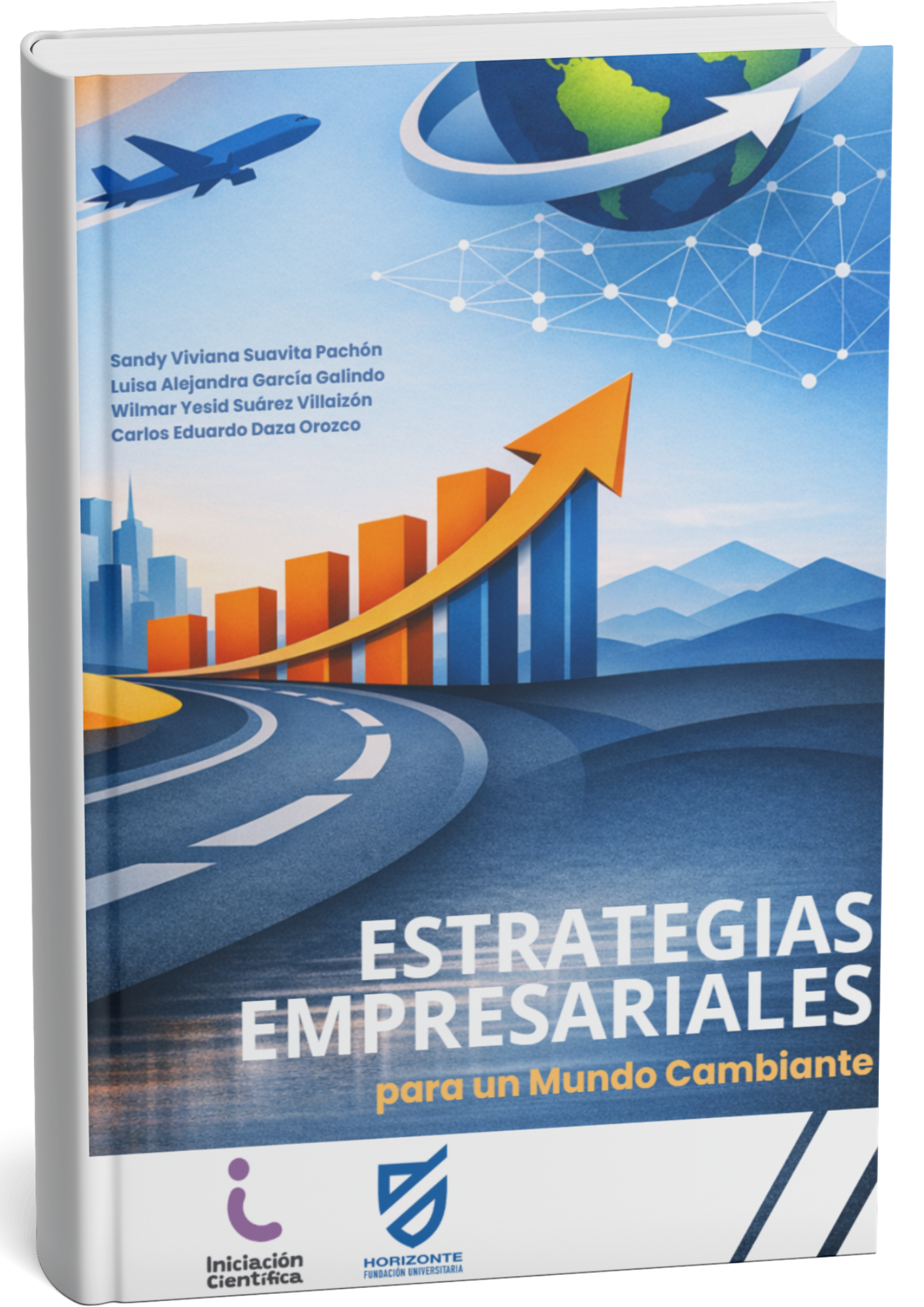
Contenido principal del artículo
Resumen
El presente capítulo se basa en un proyecto doctoral, el cual, sustentó la convergencia teórica orientada a analizar las relaciones entre la profesionalización, la riqueza socioemocional, la sucesión y la cultura organizacional adhocrática en la empresa familiar colombiana. Con fundamento en los aportes de dos estudios básicos se integraron los principales desarrollos conceptuales y empíricos que explican la interacción entre la gestión profesional y los vínculos afectivos que caracterizan a este tipo de organizaciones. La convergencia de las variables permitió proponer una interpretación integradora en la que la profesionalización actúa como un proceso evolutivo que fortalece la sostenibilidad empresarial al tiempo que preserva el legado socioemocional. La sucesión y la cultura adhocrática se reconocieron como factores que facilitan la adaptación, la innovación y la continuidad generacional dentro de estructuras más formalizadas. Este análisis contribuyó a la comprensión teórica de la firma familiar en Colombia y ofrece un marco conceptual útil para futuros estudios que busquen profundizar en los equilibrios entre racionalidad profesional y valores familiares.
##plugins.themes.bootstrap3.displayStats.downloads##
Detalles del artículo
Sección
Cómo citar
Referencias
Allaire, Y. y Firsirotu, M. E. (1984). Theories of Organizational Culture. Organization Studies, 5(3), 193–226. https://doi.org/10.1177/017084068400500301
Aragón-Amonarriz, C., Arredondo, A. M. y Iturrioz-Landart, C. (2019). How Can Responsible Family Ownership be Sustained Across Generations? A Family Social Capital Approach. Journal of Business Ethics, 159(1), 161–185. https://doi.org/10.1007/s10551-017-3728-7
Astrachan, J. H. y Jaskiewicz, P. (2008). Emotional Returns and Emotional Costs in Privately Held Family Businesses: Advancing Traditional Business Valuation. Family Business Review, 21(2), 139–149. https://doi.org/10.1111/j.1741-6248.2008.00115.x
Barley, S. R. y Kunda, G. (1992). Design and Devotion: Surges of Rational and Normative Ideologies of Control in Managerial Discourse. Administrative Science Quarterly, 37(3), 363. https://doi.org/10.2307/2393449
Barney, J. B. (1986). Organizational Culture: Can It Be a Source of Sustained Competitive Advantage? The Academy of Management Review, 11(3), 656. https://doi.org/10.2307/258317
Basco, R., Calabrò, A. y Campopiano, G. (2019). Transgenerational entrepreneurship around the world: Implications for family business research and practice. Journal of Family Business Strategy, 10(4), 100249. https://doi.org/10.1016/j.jfbs.2018.03.004
Berrone, P., Cruz, C., Gómez-Mejía, L. R., & Larraza-Kintana, M. (2010). Socioemotional wealth and corporate responses to institutional pressures: Do family-controlled firms pollute less? Administrative Science Quarterly, 55(1), 82–113. https://doi.org/10.2189/asqu.2010.55.1.82
Berrone, P., Cruz, C., & Gómez-Mejía, L. R. (2012). Socioemotional wealth in family firms. Family Business Review, 25(3), 258–279. https://doi.org/10.1177/0894486511435355
Chege, S. W., Gichunge, E., & Muema, W. (2022). Analysis of Adhocracy Culture Implementation Approach and Performance of Universities in Kenya. Journal of Strategic Management, 2(3), 1–10.
Chen, J. y Liu, L. (2022). Family firms, national culture and corporate social performance: a meta-analysis. Cross Cultural & Strategic Management, 29(2), 379–402. https://doi.org/10.1108/ccsm-09-2020-0178
Cherchem, N. (2017). The relationship between organizational culture and entrepreneurial orientation in family firms: Does generational involvement matter? Journal of Family Business Strategy, 8(2), 87–98. https://doi.org/10.1016/j.jfbs.2017.04.001
Chirico, F., Gómez-Mejia, L. R., Hellerstedt, K., Withers, M. & Nordqvist, M. (2020). To Merge, Sell, or Liquidate? Socioemotional Wealth, Family Control, and the Choice of Business Exit. Journal of Management, 46(8), 1342–1379. https://doi.org/10.1177/0149206318818723
Chirico, F. y Nordqvist, M. (2010). Dynamic capabilities and trans-generational value creation in family firms: The role of organizational culture. International Small Business Journal: Researching Entrepreneurship, 28(5), 487–504. https://doi.org/10.1177/0266242610370402
Chittoor, R. y Das, R. (2007). Professionalization of Management and Succession Performance—A Vital Linkage. Family Business Review, 20(1), 65–79. https://doi.org/10.1111/j.1741-6248.2007.00084.x
Cho, N., Lee, Y., Kim, J.H. & Yu, G. (2022). Success Factor Priorities for the Succession of Family Firms. Contemporary Management Research, 18(1), 67–91. https://doi.org/10.7903/cmr.21939
Chrisman, J. J., Chua, J. H., Pearson, A. W. y Barnett, T. (2012). Family Involvement, Family Influence, and Family–Centered Non–Economic Goals in Small Firms. Entrepreneurship Theory and Practice, 36(2), 267–293. https://doi.org/10.1111/j.1540-6520.2010.00407.x
Chrisman, J. J., Chua, J. H. y Steier, L. P. (2002). The Influence of National Culture and Family Involvement on Entrepreneurial Perceptions and Performance at the State Level. Entrepreneurship Theory and Practice, 26(4), 113–130. https://doi.org/10.1177/104225870202600407
Chua, J. H., Chrisman, J. J., & Sharma, P. (1999). Defining the family business by behavior. Entrepreneurship Theory and Practice, 23(4), 19–39. https://doi.org/10.1177/104225879902300402
Chua, J. H., Chrisman, J. J., & Sharma, P. (2003). Succession and nonsuccession concerns of family firms and agency relationship with nonfamily managers. Family Business Review, 16(2), 89–107. https://doi.org/10.1111/j.1741-6248.2003.00089.x
Colorado Guarnizo, P. A., & Tamayo Arismendi, D. A. (2025). Formación docente En Tic, un desafío para la gestión educativa. Vía Innova, 12(1), 112–132. https://doi.org/10.23850/2422068X.6833
Contreras, O. L. y Jabri, M. (2021). Socioemotional wealth of family firms: the theoretical perspective and challenges. European J. Of International Management, 16(1), Artículo 116701, 60. https://doi.org/10.1504/ejim.2021.116701
Davila, J., Duran, P., Gómez-Mejía, L. y Sanchez-Bueno, M. J. (2023). Socioemotional wealth and family firm performance: A meta-analytic integration. Journal of Family Business Strategy, 14(2), 100536. https://doi.org/10.1016/j.jfbs.2022.100536
Dekker, J., Lybaert, N., Steijvers, T. y Depaire, B. (2015). The Effect of Family Business Professionalization as a Multidimensional Construct on Firm Performance. Journal of Small Business Management, 53(2), 516–538. https://doi.org/10.1111/jsbm.12082
Dekker, J. C., Lybaert, N., Steijvers, T., Depaire, B. y Mercken, R. (2013). Family Firm Types Based on the Professionalization Construct. Family Business Review, 26(1), 81–99. https://doi.org/10.1177/0894486512445614
Denison, R. D. (1990). Corporate Culture and Organizational Effectiveness. John Wiley & Sons.
DeTienne, D. R. y Chirico, F. (2013). Exit Strategies in Family Firms: How Socioemotional Wealth Drives the Threshold of Performance. Entrepreneurship Theory and Practice, 37(6), 1297–1318. https://doi.org/10.1111/etap.12067
Donckels, R. y Fröhlich, E. (1991). Are Family Businesses Really Different? European Experiences from STRATOS. Family Business Review, 4(2), 149–160. https://doi.org/10.1111/j.1741-6248.1991.00149.x
Dyer, W. G. (1989). Integrating Professional Management into a Family Owned Business. Family Business Review, 2(3), 221–235. https://doi.org/10.1111/j.1741-6248.1989.00221.x
Dyer, W. G. y Whetten, D. A. (2006). Family Firms and Social Responsibility: Preliminary Evidence from the S&P 500. Entrepreneurship Theory and Practice, 30(6), 785–802. https://doi.org/10.1111/j.1540-6520.2006.00151.x
Espitia, Y. L. ., Grisales-Aguirre, A. ., & Gutierrez, J. G. . (2025). Professionalization and socioemotional wealth in family businesses. Bogota case. International Journal of Innovative Research and Scientific Studies, 8(3), 4502–4513. https://doi.org/10.53894/ijirss.v8i3.7541
Ferrari, F. (2020). Exploring the side effects of socio-emotional wealth. A multilevel analysis approach to the dysfunctional dynamics in family business succession. International Journal of Entrepreneurship and Small Business, 40(1), Artículo 106943, 128. https://doi.org/10.1504/IJESB.2020.106943
Fondas, N. y Denison, D. R. (1991). Corporate Culture and Organizational Effectiveness. The Academy of Management Review, 16(1), 203. https://doi.org/10.2307/258613
Frost, P. J., Kaiser, E. F. y Quinn, R. E. (1989). Beyond Rational Management: Mastering the Paradoxes and Competing Demands of High Performance. The Academy of Management Review, 14(3), 462. https://doi.org/10.2307/258181
Gallo, M. A. y Sveen, J. (1991). Internationalizing the Family Business: Facilitating and Restraining Factors. Family Business Review, 4(2), 181–190. https://doi.org/10.1111/j.1741-6248.1991.00181.x
Gedajlovic, E., Lubatkin, M. H. & Schulze, W. S. (2004). Crossing the Threshold from Founder Management to Professional Management: A Governance Perspective. Journal of Management Studies, 41(5), 899–912. https://doi.org/10.1111/j.1467-6486.2004.00459.x
Gomez-Mejia, L. R [L. R.], Nunez-Nickel, M. y Gutierrez, I. (2001). The role of family ties in agency contracts. Academy of Management Journal, 44(1), 81–95. https://doi.org/10.2307/3069338
Gómez-Mejía, L. R., Cruz, C., Berrone, P., & de Castro, J. (2011). The bind that ties: Socioemotional wealth preservation in family firms. The Academy of Management Annals, 5(1), 653–707. https://doi.org/10.1080/19416520.2011.593320
Gómez-Mejía, L. R., Haynes, K. T., Núñez-Nickel, M., Jacobson, K. J. L., & Moyano-Fuentes, J. (2007). Socioemotional wealth and business risks in family-controlled firms: Evidence from Spanish olive oil mills. Administrative Science Quarterly, 52(1), 106–137. https://doi.org/10.2189/asqu.52.1.106
Gómez-Mejía, L. R. y Herrero, I. (2022). Back to square one: The measurement of Socioemotional Wealth (SEW). Journal of Family Business Strategy, 13(4), 100480. https://doi.org/10.1016/j.jfbs.2021.100480
Gu, Q., Lu, J. W. y Chung, C.‑N. (2019). Incentive or Disincentive? A Socioemotional Wealth Explanation of New Industry Entry in Family Business Groups. Journal of Management, 45(2), 645–672. https://doi.org/10.1177/0149206316678450
Habbershon, T. G., & Pistrui, J. (2002). Enterprising families domain: Family-influenced ownership groups in pursuit of transgenerational wealth. Family Business Review, 15(3), 223–237. https://doi.org/10.1111/j.1741-6248.2002.00223.x
Habbershon, T. G., & Williams, M. L. (1999). A resource-based framework for assessing the strategic advantages of family firms. Family Business Review, 12(1), 1–25. https://doi.org/10.1111/j.1741-6248.1999.00001.x
Hall, A., Melin, L. y Nordqvist, M. (2001). Entrepreneurship as Radical Change in the Family Business: Exploring the Role of Cultural Patterns. Family Business Review, 14(3), 193–208. https://doi.org/10.1111/j.1741-6248.2001.00193.x
Hall, A. y Nordqvist, M. (2008). Professional Management in Family Businesses: Toward an Extended Understanding. Family Business Review, 21(1), 51–69. https://doi.org/10.1111/j.1741-6248.2007.00109.x
Hall, R. (1992). The strategic analysis of intangible resources. Strategic Management Journal, 13(2), 135–144. https://doi.org/10.1002/smj.4250130205
Hamzah, M. I., Othman, A. K., Fikry, A. & Abdullah, M. Z. (2023). The interaction effects of adhocracy culture, work experience on information acquisition and job performance of bank salespeople. Journal of Financial Services Marketing, 28(3), 544–557. https://doi.org/10.1057/s41264-022-00166-9
Handler, W. C. (1990). Succession in Family Firms: A Mutual Role Adjustment between Entrepreneur and Next-generation Family Members. Entrepreneurship Theory and Practice, 15(1), 37–52. https://doi.org/10.1177/104225879001500105
Handler, W. C. (1994). Succession in Family Business: A Review of the Research. Family Business Review, 7(2), 133–157. https://doi.org/10.1111/j.1741-6248.1994.00133.x
Heinonen, J. y Ljunggren, E. (2022). It’s not all about the money: narratives on emotions after a sudden death in family businesses. Journal of Small Business & Entrepreneurship, 34(6), 661–683. https://doi.org/10.1080/08276331.2020.1723351
Hitt, M. A., Ireland, R. D. & Hoskisson, R. E. (2015). Administración estratégica. Competitividad y globalización: Conceptos y casos (P. Mascaro Sacristan; Suárez Moreno, Mara Paulina, Trads.) (Undécima edición). Cengage Learning.
Hofstede, G. H., Hofstede, G. J. y Minkov, M. (2010). Cultures and organizations: Software of the mind intercultural cooperation and its importance for survival (3rd ed.). McGraw-Hill.
Howard, L. W. (1998). Validating the competing values model as a representation of organizational cultures. The International Journal of Organizational Analysis, 6(3), 231–250. https://doi.org/10.1108/eb028886
Junior, j. t., Gomes, g., Montreuil Carmona, l. j. de & Tambosi, s. s. v. (2021). Organizational Culture and work–life balance as facilitators of service innovation: study in a technology knowledge-intensive business services firm. International Journal of Innovation Management, 25(07), Artículo 2130002. https://doi.org/10.1142/S1363919621300026
Le Breton–Miller, I., Miller, D. & Steier, L. P. (2004). Toward an Integrative Model of Effective FOB Succession. Entrepreneurship Theory and Practice, 28(4), 305–328. https://doi.org/10.1111/j.1540-6520.2004.00047.x
Lin, S. y Hu, S. (2007). A Family Member or Professional Management? The Choice of a CEO and Its Impact on Performance. Corporate Governance: An International Review, 15(6), 1348–1362. https://doi.org/10.1111/j.1467-8683.2007.00650.x
López, Y., Ramírez, D., Hernández, A., & Duque, P. (2023). Mapeo científico de la investigación a nivel mundial sobre riqueza socioemocional y empresas familiares. Estudios Gerenciales, 39(167), 233–247. https://doi.org/10.18046/j.estger.2023.167.5656
Lopez-Espitia, Y., Vivares, J. A., & Ramirez-Ospina, D. E. . (2025). Socioemotional wealth and culture in family businesses: A scientometric analysis. International Journal of Innovative Research and Scientific Studies, 8(2), 745–756. https://doi.org/10.53894/ijirss.v8i2.5319
Lumpkin, G. T., Brigham, K. H. & Moss, T. W. (2010). Long-term orientation: Implications for the entrepreneurial orientation and performance of family businesses. Entrepreneurship & Regional Development, 22(3-4), 241–264. https://doi.org/10.1080/08985621003726218
Madison, K., Daspit, J. J., Turner, K. & Kellermanns, F. W. (2018). Family firm human resource practices: Investigating the effects of professionalization and bifurcation bias on performance. Journal of Business Research, 84, 327–336. https://doi.org/10.1016/j.jbusres.2017.06.021
Massis, A. de, Frattini, F., Pizzurno, E. & Cassia, L. (2015). Product Innovation in Family versus Nonfamily Firms: An Exploratory Analysis. Journal of Small Business Management, 53(1), 1–36. https://doi.org/10.1111/jsbm.12068
Massis, A. de, Kotlar, J., Chua, J. H. & Chrisman, J. J. (2014). Ability and Willingness as Sufficiency Conditions for Family-Oriented Particularistic Behavior: Implications for Theory and Empirical Studies. Journal of Small Business Management, 52(2), 344–364. https://doi.org/10.1111/jsbm.12102
Melin, L. y Nordqvist, M. (2007). The reflexive dynamics of institutionalization: the case of the family business. Strategic Organization, 5(3), 321–333. https://doi.org/10.1177/1476127007079959
Miller, D. y Le Breton-Miller, I. (2006). Family Governance and Firm Performance: Agency, Stewardship, and Capabilities. Family Business Review, 19(1), 73–87. https://doi.org/10.1111/j.1741-6248.2006.00063.x
Miller, D., Minichilli, A. & Corbetta, G. (2013). Is family leadership always beneficial? Strategic Management Journal, 34(5), 553–571. https://doi.org/10.1002/smj.2024
Miller, D., Steier, L. & Le Breton-Miller, I. (2003). Lost in time: intergenerational succession, change, and failure in family business. Journal of Business Venturing, 18(4), 513–531. https://doi.org/10.1016/S0883-9026(03)00058-2
Minichilli, A., Corbetta, G. & MacMillan, I. C. (2010). Top Management Teams in Family‐Controlled Companies: ‘Familiness’, ‘Faultlines’, and Their Impact on Financial Performance. Journal of Management Studies, 47(2), 205–222. https://doi.org/10.1111/j.1467-6486.2009.00888.x
Naranjo-Valencia, J. C., Jiménez-Jiménez, D. & Sanz-Valle, R. (2016). Studying the links between organizational culture, innovation, and performance in Spanish companies. Revista Latinoamericana De Psicología, 48(1), 30–41. https://doi.org/10.1016/j.rlp.2015.09.009
Njagi, A. W., Ngugi Kamau, J. & Muraguri, C. W. (2020). Adhocracy Culture and Strategy Implementation: An Application within Professional Bodies in Kenya. International Journal of Business and Management, 15(9), 47. https://doi.org/10.5539/ijbm.v15n9p47
O'Reilly, C. A., & Chatman, J. A. (1996). Culture as social control: Corporations, cults, and commitment. In B. M. Staw & L. L. Cummings (Eds.), Research in organizational behavior: An annual series of analytical essays and critical reviews. JAI Press. chrome-extension://efaidnbmnnnibpcajpcglclefindmkaj/https://faculty.haas.berkeley.edu/chatman/papers/30_cultureassocialcontrol.pdf
Polat, G. (2021). Advancing the multidimensional approach to family business professionalization. Journal of Family Business Management, 11(4), 555–571. https://doi.org/10.1108/JFBM-03-2020-0020
Polat, G. & Benligiray, S. (2022). The impact of family business professionalization on financial performance: a multidimensional approach. Journal of Small Business and Enterprise Development, 29(7), 1149–1175. https://doi.org/10.1108/JSBED-11-2021-0437
Purkayastha, S., Manolova, T. S. & Edelman, L. F. (2018). Business group effects on the R&D intensity-internationalization relationship: Empirical evidence from India. Journal of World Business, 53(2), 104–117. https://doi.org/10.1016/j.jwb.2016.11.004
Qi, Y. y Wu, J. (2023). Performance feedback, succession process and innovative activities of family firms: evidence from China. Asian Business & Management, 22(2), 765–791. https://doi.org/10.1057/s41291-022-00192-4
Quinn, R. E. y Rohrbaugh, J. (1983). A Spatial Model of Effectiveness Criteria: Towards a Competing Values Approach to Organizational Analysis. Management Science, 29(3), 363–377. https://doi.org/10.1287/MNSC.29.3.363
Rohim, A. y Budhiasa, I. G. S. (2019). Organizational culture as moderator in the relationship between organizational reward on knowledge sharing and employee performance. Journal of Management Development, 38(7), 538–560. https://doi.org/10.1108/JMD-07-2018-0190
Schulze, W. S., Lubatkin, M. H., Dino, R. N. & Buchholtz, A. K. (2001). Agency Relationships in Family Firms: Theory and Evidence. Organization Science, 12(2), 99–116. https://doi.org/10.1287/orsc.12.2.99.10114
Sharma, P. (2011). Strategic entrepreneurial behaviours in family businesses. International Journal of Entrepreneurship and Innovation Management, 13(1), Artículo 38444, 4. https://doi.org/10.1504/IJEIM.2011.038444
Tsao, C.‑W., Chen, S.‑J., Lin, C.‑S. y Hyde, W. (2009). Founding-Family Ownership and Firm Performance. Family Business Review, 22(4), 319–332. https://doi.org/10.1177/0894486509339322
Waldkirch, M., Melin, L. y Nordqvist, M. (2017). When the Cure Turns Counterproductive: Parallel Professionalization In Family Firms. Academy of Management Proceedings, 2017(1), 16270. https://doi.org/10.5465/AMBPP.2017.50
Waldkirch, M., Melin, L. y Nordqvist, M. (2023). Too Much of a Good Thing? Professionalization as a Multiple Practice Adoption in a Family Firm. Academy of Management Proceedings, 2023(1), Artículo 12093. https://doi.org/10.5465/AMPROC.2023.280bp
Yeung, A. K., Brockbank, J. W. & Ulrich, D. (1991). Organizational Culture and Human Resource Practices: An Empirical Assessment. https://books.google.com.co/books?id=eW00uAAACAAJ
Zahra, S. A. y Filatotchev, I. (2004). Governance of the Entrepreneurial Threshold Firm: A Knowledge‐based Perspective. Journal of Management Studies, 41(5), 885–897. https://doi.org/10.1111/j.1467-6486.2004.00458.x
Zahra, S. A., Hayton, J. C., Neubaum, D. O., Dibrell, C. & Craig, J. (2008). Culture of Family Commitment and Strategic Flexibility: The Moderating Effect of Stewardship. Entrepreneurship Theory and Practice, 32(6), 1035–1054. https://doi.org/10.1111/j.1540-6520.2008.00271.x
Zahra, S. A., Hayton, J. C. & Salvato, C. (2004). Entrepreneurship in Family vs. Non–Family Firms: A Resource–Based Analysis of the Effect of Organizational Culture. Entrepreneurship Theory and Practice, 28(4), 363–381. https://doi.org/10.1111/j.1540-6520.2004.00051.x
Zellweger, T. M., Nason, R. S. & Nordqvist, M. (2012). From Longevity of Firms to Transgenerational Entrepreneurship of Families. Family Business Review, 25(2), 136–155. https://doi.org/10.1177/0894486511423531